Terrassa continues to advance its smart city model through initiatives that integrate technology, data, and citizen participation. One of the most prominent projects is Terrassa Smart Buildings: Buildings That Build the Smart City, an initiative that transforms buildings into intelligent nodes capable of generating data both about their own operation and the urban environment around them.
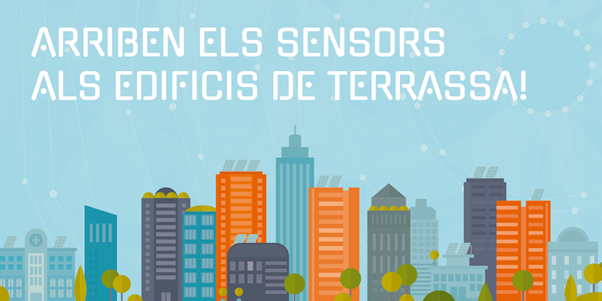
This information helps improve municipal management, promote new public services, and move towards a more sustainable, efficient, and people-centered city.
The Origin of the Project
The project began in 2018, when the City Council of Terrassa applied to the National Smart Territories Plan, promoted by Red.es and funded through European FEDER funds.
The proposal was selected among several candidates and became one of the finalist projects at the national level, with total funding of €2.5 million, co-financed by Red.es and the City Council itself.
This milestone strengthened Terrassa’s commitment to digital transformation and the use of data as a key tool for municipal management.
A Project Built with Citizen Participation
From its earliest stages, the project was conceived as an open and collaborative initiative.
Between 2018 and 2020, a participatory process was carried out through the Participa Terrassa platform, where citizens contributed proposals in areas such as:
- Energy and sustainability
- Environment
- Health and well-being
- Mobility
- Safety
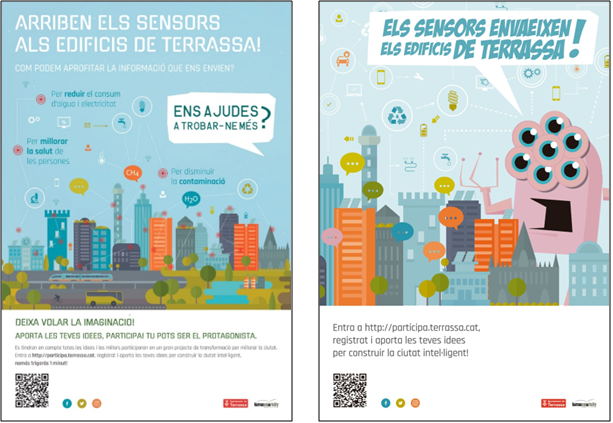
These contributions, together with the collaboration of organizations such as UPC, ADIF, FGC, and Mútua de Terrassa, helped define the different use cases of the project.
From Concept to Deployment
Once the objectives had been defined, the project was deployed across a total of 169 buildings throughout the city, including a wide variety of facilities such as schools, sports centers, libraries, hospitals, markets, and transport stations.
To make this possible, Red.es, in collaboration with the City Council, awarded the project to IMESAPI, the company responsible for deploying the required technological infrastructure.
A Data-Driven City
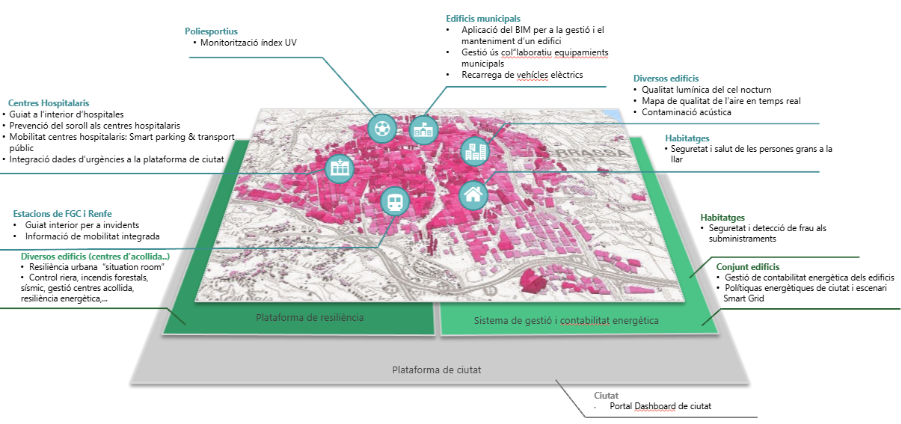
Through the installation of IoT sensors and data collection devices, buildings become distributed observation points across the city.
In addition to generating information on energy consumption, environmental conditions, and facility performance, these buildings also collect data about their surroundings, such as air quality, noise levels, and other environmental variables.
As a result, buildings evolve beyond being mere physical infrastructures and become part of a city-wide information-gathering network that helps understand what is happening across the city in real time.
The collected data is integrated into the municipal platform and transformed into actionable knowledge that supports better decision-making, resource optimization, and the development of new digital services for citizens.
Looking to the Future
The Smart Buildings project represents a clear commitment to a city model that learns from itself and its environment through data.
Beyond technology, buildings become active elements of the urban digital infrastructure, providing valuable information to better understand the territory, anticipate needs, and respond to emerging urban challenges.
Through this initiative, Terrassa continues to strengthen its position as a benchmark for innovation and digital transformation in service of its citizens.
0 Comments